

Unleashing Growth: The Powerful Role of Play in Child Development
In today’s world, where education often focuses on test results and academic achievements, it is easy to forget the fundamental role that play plays in children’s learning process. However, numerous scientific studies confirm that play is not only a natural way for young children to explore the world, but also a crucial element of their holistic development.
CHILD DEVELOPMENT
@timbiu
2 min read

Play as the Foundation of Cognitive Development
Play plays a vital role in shaping cognitive skills in children. Through exploration, experimentation, and problem-solving during play, children develop critical thinking and mental flexibility. Research shows that engaging in diverse forms of play fosters the creation of new neural connections in the brain, which translates into improved cognitive abilities and memory.
Social and Emotional Development through Play Interactions
Interactions with peers during play teach children empathy, cooperation, and communication. Shared activities, such as role-playing or team games, allow for the development of social and emotional skills essential for adult life. Children learn to negotiate, resolve conflicts, and express their emotions in a safe environment.
Creativity and Imagination as an Outcome of Free Play
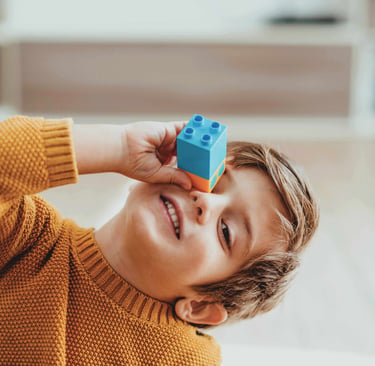
Unstructured, free play creates space for children to develop creativity and imagination. Creating their own play scenarios, building with blocks, or drawing are activities that stimulate creative thinking. Studies indicate that children who regularly engage in imaginative play demonstrate greater problem-solving abilities and innovative thinking.
The Importance of Play in Formal Education
Incorporating elements of play into the formal education process can significantly increase students’ motivation and engagement. Teachers who introduce play-based activities into their lessons observe improved academic performance and better well-being among students. Play in the classroom also promotes better knowledge retention and the development of critical thinking skills.
The Role of Parents and Teachers in Promoting Learning through Play
Parents and teachers play a crucial role in creating an environment conducive to learning through play. Providing children with time and space for free play, as well as participating in their activities, strengthens family bonds and supports emotional development. Shared activities, such as board games or collaborative art projects, can also help develop social and cognitive skills.
Parents and teachers play a crucial role in creating an environment that fosters learning through play. If you want to support your child’s creativity and imagination, check out our educational coloring books that combine learning with fun. [Check out our coloring book collection here].
Institutional Sources of Inspiration: Harvard Center on the Developing Child; UNICEF; World Health Organization; American Academy of Pediatrics; Zero to Three; National Association for the Education of Young Children; Preschool Neuroscience Summit
Disclaimer
The information in this blog post is for general information and learning only. It is not professional medical, psychological, or legal advice. We prepare content carefully and base it on reputable sources, but we cannot guarantee it is complete or perfectly accurate.
You are responsible for how you use the ideas and suggestions in this post.
The author and website are not liable for any losses, damages, or other consequences that may result from using this content.
This is not a substitute for professional help. If you have concerns about a child’s emotional, developmental, or behavioral needs, please consult a qualified professional (for example, a pediatrician, child psychologist, or licensed therapist).
Source: photo freepik
Walk gently. Walk together.


TIMBIU™
Strength, gently held.
© 2026 TIMBIU™. All rights reserved. All characters, illustrations and texts are protected by copyright.